Why Engine Oil Labels Matter for Lubricant Packaging Quality
Engine oil labels play an important role in the success of any lubricant product. A label is not only a printed sticker on a bottle or container; it is the first point of communication between the brand and the customer.
When a buyer sees an engine oil bottle on a retail shelf, the label helps them understand the product type, grade, usage, quality, and brand value within a few seconds. Therefore, strong and professional labeling is essential for lubricant packaging quality.
In the lubricant industry, packaging faces more challenges than many other product categories. Engine oil bottles are handled frequently, stored for long periods, exposed to oily surfaces, and sometimes kept in hot or dusty environments. Because of this, ordinary labels may peel, fade, smudge, or lose their clean appearance. However, high-quality engine oil labels are designed to stay strong even under tough conditions.
A good label supports branding, product safety, customer trust, and clear communication. Moreover, it helps the product look professional from manufacturing to final use. For lubricant manufacturers, automotive oil brands, distributors, and private label companies, investing in durable labels can create a major difference in product presentation and market performance.
Importance of Engine Oil Labels in Lubricant Packaging
Engine oil labels are important because they carry all the essential product details that customers need before buying. These details usually include engine oil grade, viscosity, quantity, usage instructions, manufacturer information, safety warnings, batch number, barcode, and other technical information. As a result, the label becomes a reliable guide for both retailers and end users.
Unlike simple decorative stickers, lubricant labels must perform in demanding conditions. Oil spills, rough handling, warehouse storage, and transportation can damage low-quality labels quickly. In addition, engine oil containers are often made from plastic or HDPE materials, which require suitable adhesives for proper bonding. If the adhesive is weak, the label may lift from the edges and reduce the product’s professional look.
A clean and durable label improves customer confidence. When the packaging looks neat and premium, buyers naturally feel that the product inside is also reliable. Therefore, engine oil labels directly influence the customer’s buying decision.
First Impression Matters on Lubricant Bottles
Packaging appearance can strongly affect how customers judge a product. Before reading the full details, buyers usually notice the label design, colour, finish, and overall presentation. A professionally printed label makes the bottle look trustworthy and market-ready.
For example, a lubricant product with sharp printing, bold branding, clear product grade, and attractive colour combination can stand out among many similar products. Meanwhile, a dull or damaged label may create doubt about product quality. Even if the engine oil inside is good, poor label presentation can reduce customer interest.
Because the lubricant market is competitive, brands need labels that create a strong first impression. Engine oil labels help highlight the brand logo, product category, performance features, and technical benefits. Furthermore, premium label finishing such as gloss, matte, metallic effect, or lamination can improve shelf appeal.
Durability Is Essential for Oil-Based Products
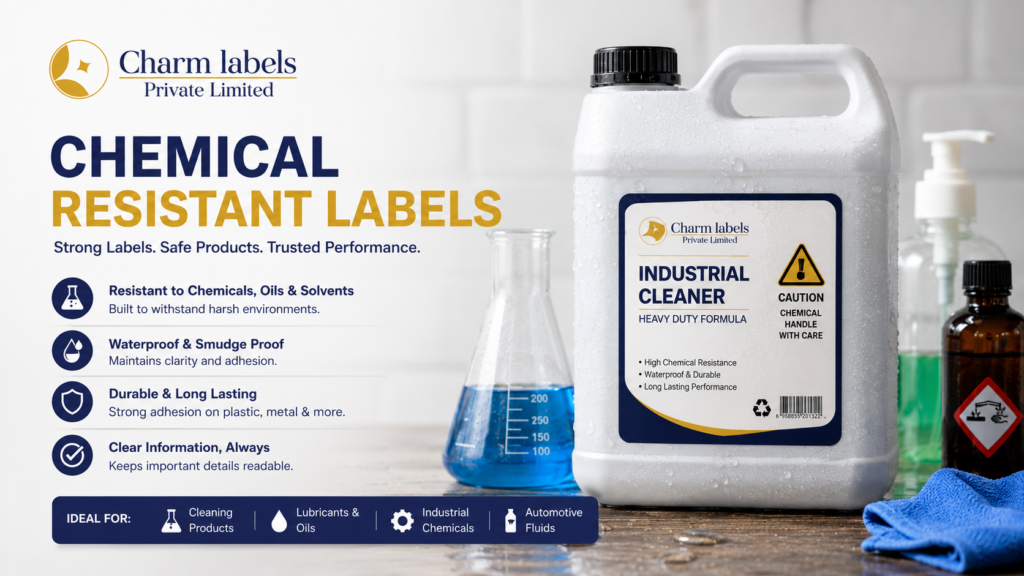
Durability is one of the most important qualities of lubricant labels. Engine oil packaging often comes into contact with oil, grease, moisture, dust, and heat. As a result, the label material and adhesive must be selected carefully.
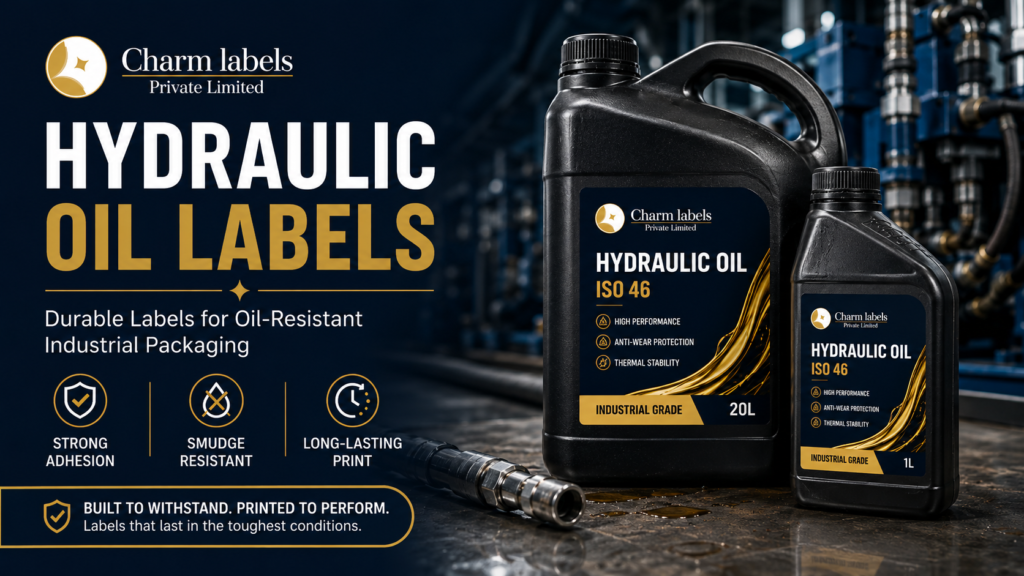
Oil-resistant materials help prevent stains, smudging, and print damage. Additionally, strong adhesives keep the label fixed firmly on the bottle surface. Lamination or protective coating can also improve resistance against scratches and handling marks. Therefore, durable engine oil labels maintain a clean appearance throughout the product lifecycle.
During transportation, lubricant bottles may rub against each other inside cartons. Without proper label protection, printed content can become dull or damaged. However, labels made with the right material and finishing can withstand regular movement and handling. This helps brands deliver products to retailers and customers in better condition.
Clear Product Information Builds Customer Trust
Customers need accurate information before choosing engine oil. Vehicle owners, mechanics, retailers, and automobile service centres often check viscosity grade, engine compatibility, quantity, and product type before purchase. Therefore, engine oil labels must display all details clearly.
Common information printed on lubricant labels includes SAE grade, API standards, usage instructions, manufacturing details, expiry or shelf-life information, storage guidance, barcode, QR code, and safety precautions. In addition, some brands include product benefits such as engine protection, smooth performance, heat resistance, fuel efficiency support, or longer engine life.
Clear printing improves readability and reduces confusion. Moreover, it helps customers select the correct oil for their vehicle or machinery. If the label text is too small, blurry, or poorly arranged, users may find it difficult to trust the product. As a result, professional label printing becomes an important part of customer communication.
Engine Oil Labels Support Brand Identity
A label is a powerful branding tool. Every lubricant brand needs a unique identity to stand apart from competitors. Engine oil labels help create that identity through logo placement, colour theme, typography, design style, and product layout.
Consistent label design across different engine oil variants can improve brand recognition. For instance, a company may use one colour for petrol engine oil, another colour for diesel engine oil, and a separate design style for premium synthetic oil. This makes product identification easier for customers. At the same time, it strengthens the brand image.
Besides visual appeal, labels also communicate brand professionalism. When packaging looks high-quality, customers are more likely to believe in the reliability of the lubricant. Consequently, good label design can support repeat purchases and long-term brand loyalty.
Material Selection for Engine Oil Labels
Choosing the right material is very important for lubricant packaging. Since engine oil bottles are exposed to oil and handling, the label material must be strong, flexible, and resistant to damage.
PP labels are commonly used because they offer good durability and water resistance. Similarly, synthetic labels are suitable for oil-based products because they can handle moisture and rough usage better than normal paper labels. Vinyl labels provide excellent strength and flexibility, making them useful for containers that need long-lasting performance. In some cases, paper labels may be used for cost-effective packaging, but they usually need lamination or coating for better protection.
Benefits of High-Quality Engine Oil Labels
High-quality engine oil labels help lubricant brands improve product appearance, protect important information and maintain a professional packaging image.
Improves Product Appearance
Premium engine oil labels make lubricant packaging more attractive, neat and shelf-ready for retail display.
Protects Printed Information
Durable labels protect product details from oil, water, scratches, smudging and regular handling damage.
Supports Clear Communication
Clear label printing helps customers understand product grade, usage instructions, quantity and brand details easily.
Builds Better Brand Recall
A strong and professional label design helps customers remember the lubricant brand more easily.
Reduces Packaging Complaints
Oil-resistant labels reduce peeling, fading and edge-lifting issues during storage and transportation.
Maintains Professional Image
Clean and durable labels help products look professional during storage, distribution and retail display.
Printing Quality Improves Product Presentation
High-resolution printing gives engine oil labels a sharp and professional appearance. Clear text, rich colours, accurate graphics, and neat finishing help the product look premium. In contrast, poor printing can make even a good design appear weak.
Advanced printing technology allows brands to print barcodes, QR codes, small technical text, icons, product images, and detailed information with clarity. Furthermore, colour consistency is important when producing labels in bulk. If every batch has a different shade, the brand may lose its professional look.
For lubricant packaging, printing quality must remain stable even after storage and handling. Protective coatings, UV-resistant inks, and lamination can help preserve colour and print clarity. As a result, the label continues to look fresh and readable for a longer time.
Oil Resistance and Heat Resistance
Engine oil labels must be designed to handle oil exposure. During filling, packing, transportation, or customer use, small oil spills may touch the bottle surface. If the label is not oil-resistant, it can become stained, sticky, or unreadable. Therefore, oil resistance is a key requirement for lubricant labels.
Heat resistance is also important. Lubricant products may be stored in warehouses, vehicles, shops, or industrial spaces where temperatures can change. A weak label may shrink, peel, or lose adhesion in such conditions. However, high-quality label materials and adhesives can perform better under heat and pressure.
In addition, labels used for industrial lubricants, gear oil, hydraulic oil, and heavy-duty engine oil must handle tough environments. Because these products are often used in workshops and factories, the label should remain intact until the product is fully used.
Better Shelf Appeal for Retail Sales
Retail shelf appeal is important for lubricant brands. When many engine oil bottles are displayed together, customers compare products quickly. A strong label design helps capture attention and encourages buyers to read more about the product.
Bright but professional colours, bold product names, readable grade information, and clean layout can improve shelf visibility. Moreover, premium finishes such as gloss lamination or matte lamination can add value to the packaging. While gloss gives a shiny and vibrant look, matte provides a smooth and premium appearance.
Good engine oil labels also help retailers arrange products neatly. Clear product identification reduces confusion and improves the shopping experience. As a result, customers can quickly find the right lubricant type without asking for extra help.
Label Design for Different Lubricant Products
Different lubricant products require different label approaches. Engine oil, gear oil, hydraulic oil, brake oil, transmission oil, and industrial lubricants may have different users and packaging needs. Therefore, the label design should match the product category.
For passenger vehicle engine oil, the design may focus on performance, mileage support, and engine protection. Heavy-duty diesel engine oil labels may highlight strength, load performance, and durability. Industrial lubricant labels may give more space to technical details, safety instructions, and usage guidelines.
Besides that, premium synthetic oil labels often use modern designs, metallic effects, and bold colour schemes. Budget-friendly products may use simple but clear layouts. In every case, the label should support both branding and practical information.
Compliance and Safety Information
Lubricant packaging must include accurate and necessary information. While the exact requirements may vary based on market and product type, labels usually need product name, manufacturer details, quantity, batch information, safety warnings, and usage instructions. Therefore, label printing must be precise and readable.
Safety information is especially important because engine oil should be handled properly. Customers may need guidance about storage, disposal, skin contact, and keeping the product away from children. In addition, barcode and QR code printing can help with product tracking, inventory management, and customer engagement.
A professional label printing company ensures that all important details are printed clearly. Furthermore, it helps brands choose suitable label size, layout, and material based on the container shape.
Why Adhesive Quality Matters
Adhesive quality is often ignored, but it is very important for engine oil labels. Even the best printed label can fail if the adhesive is not suitable for the bottle surface. Lubricant bottles are commonly made from HDPE or plastic, and these surfaces need strong bonding.
A poor adhesive may cause edge lifting, bubbling, or complete peeling. This problem becomes worse when the container is exposed to oil, moisture, or heat. However, the right adhesive keeps the label stable and neat.
Before final production, brands should consider bottle material, surface texture, storage condition, and filling process. As a result, the selected adhesive will perform better in real usage conditions.
Role of Customization in Engine Oil Labels
Customization helps lubricant brands create labels that match their exact packaging needs. Size, shape, colour, material, finish, and adhesive can be customized based on bottle type and brand style. In addition, labels can be designed for front panels, back panels, wrap-around applications, or multi-size containers.
Customized engine oil labels allow brands to present their products more professionally. They can include product features, technical icons, brand story, QR codes, and marketing messages. Moreover, customization helps maintain consistency across different product ranges.
When the label fits the bottle perfectly, the packaging looks neat and premium. On the other hand, incorrect label size or poor placement can reduce the overall appearance. Therefore, proper label planning is necessary before printing.
Why Choose Professional Label Printing
Professional label printing is important because lubricant packaging needs more than basic sticker production. A skilled label manufacturer understands material selection, adhesive performance, printing quality, finishing, and packaging conditions.
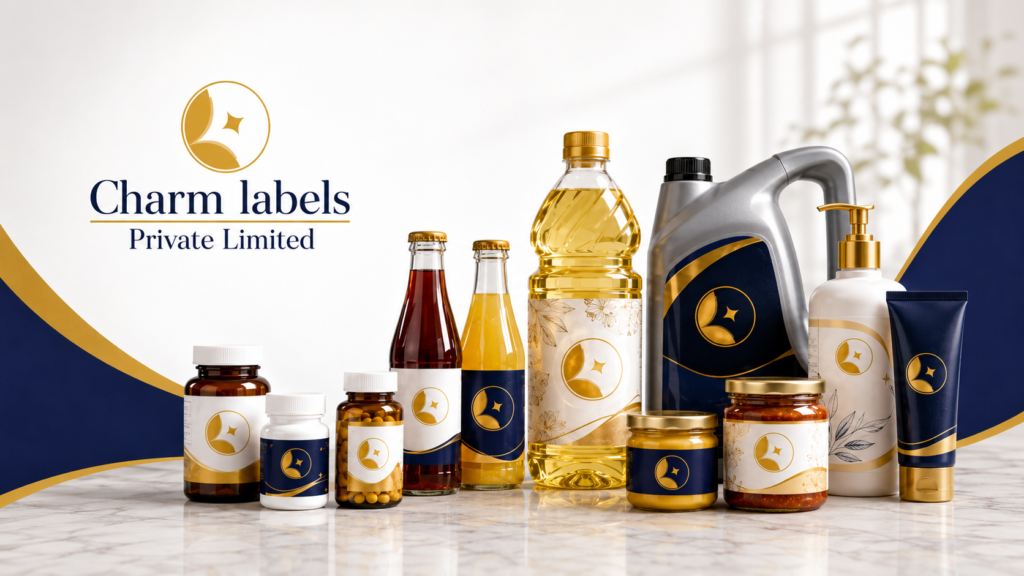
At Charm Labels Private Limited, engine oil labels can be produced with strong materials, clear printing, and durable finishing suitable for lubricant bottles and containers. The labels can be customized based on product type, bottle size, branding requirement, and usage condition. Moreover, high-quality printing ensures sharp text, attractive colours, and long-lasting performance.
With the right label printing support, lubricant brands can improve packaging quality and build stronger trust among customers. Therefore, choosing a professional label partner is a smart investment for long-term brand growth.
Conclusion
Engine oil labels matter because they directly affect lubricant packaging quality, brand image, customer trust, and product communication. A durable and well-designed label helps the bottle stay clean, professional, and informative throughout storage, transport, retail display, and final usage.
Since lubricant products face oil exposure, heat, moisture, and frequent handling, labels must be made with suitable materials and strong adhesives. In addition, high-quality printing ensures that product details remain clear and readable. Overall, professional engine oil labels help lubricant brands create better packaging, improve shelf appeal, and build confidence in the market.
For any engine oil, gear oil, hydraulic oil, or industrial lubricant product, the right label can make a strong difference. Therefore, brands that want long-lasting packaging quality should always choose durable, oil-resistant, and professionally printed labels.
Frequently Asked Questions About Engine Oil Labels
1. Why are engine oil labels important for lubricant packaging?
Engine oil labels are important because they display product grade, usage details, brand information, safety instructions and barcode details. They also improve the professional look of lubricant packaging.
2. What type of material is best for engine oil labels?
PP, synthetic, vinyl and laminated label materials are suitable for engine oil labels. These materials offer better resistance against oil, water, scratches and regular handling.
3. Are engine oil labels oil-resistant?
Yes, high-quality engine oil labels can be made with oil-resistant materials, strong adhesives and protective lamination to prevent peeling, smudging and fading.
4. Can engine oil labels be customized?
Yes, engine oil labels can be customized in size, shape, colour, material, finish and adhesive type based on bottle size, container surface and brand design requirements.
5. Do engine oil labels work on HDPE and plastic containers?
Yes, engine oil labels can be designed with suitable adhesives for HDPE bottles, plastic cans and lubricant containers to ensure strong bonding and long-lasting performance.
6. How do high-quality engine oil labels help brands?
High-quality engine oil labels improve shelf appeal, protect printed information, increase brand recall and keep lubricant products looking clean and professional.